

Let’s be honest. Nobody looks forward to a tooth extraction. The very thought of having a tooth pulled is enough to make most people feel a little uneasy. But the truth is, sometimes removing a tooth is the best thing you can do for your oral health.
Tooth extractions are among the most common dental procedures performed today. Whether it’s due to severe decay, overcrowding, or damage beyond repair, there are many reasons for a dentist to recommend a tooth extraction.
The good news is, with modern techniques and proper care, the process is far more comfortable than you might think. Let’s go through what tooth extractions actually involve, and what you can expect before, during, and after the procedure.
When is a tooth extraction necessary?
It is true that your dentist will always try to preserve your tooth where possible. However, there are situations where extraction is the most sensible option both for your dental health and overall wellbeing.
Here are some of the more common scenarios that warrant tooth extraction:
- When severe tooth decay has damaged your tooth beyond repair
- When a cavity has penetrated deep into the tooth structure (especially if reaching the pulp region, causing infection and intense pain)
- If a root canal treatment isn’t viable or has failed
Extraction can also become necessary when a tooth becomes too loose to save. Loosened tooth may be caused by an advanced stage of gum disease which can destroy the bone and tissue that hold the tooth in place. Removing it helps to prevents further damage to surrounding teeth and bone structure. Overcrowding is another common reason, particularly before orthodontic treatment. If there isn’t enough room in your mouth for all your teeth to align properly, removing one or more teeth creates the space needed for braces or aligners to do their job effectively.
Another potential cause behind tooth extraction is that of impacted wisdom teeth. When hose troublesome third molars don’t have enough room to emerge properly, they frequently require extraction. Left untreated, they can cause pain, infection, and damage to neighbouring teeth. Also, severe dental trauma from accidents or sports injuries can result in teeth that are damaged beyond repair. In such cases, extraction followed by replacement options like implants or bridges becomes necessary.
What happens during a tooth
extraction?
Knowing what to expect can help ease any anxiety you might have. There are two main types of extractions: simple and surgical.
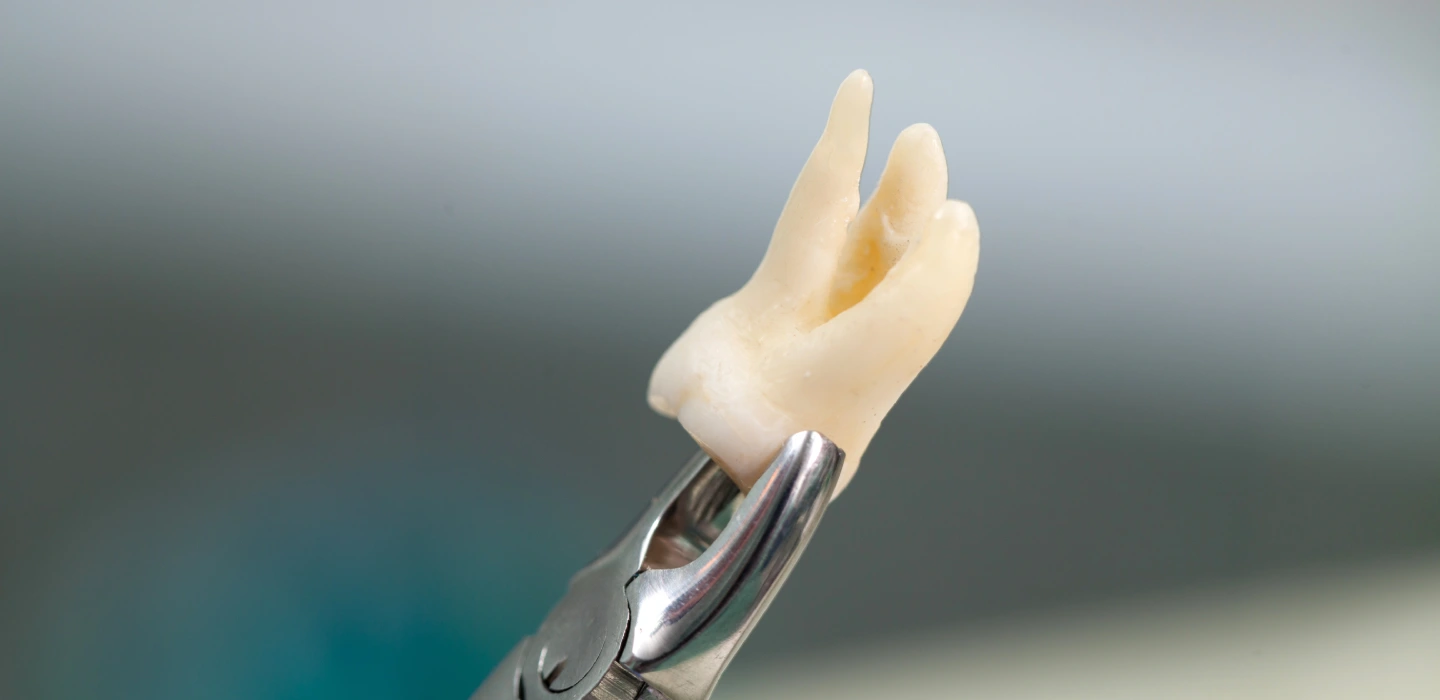
A simple extraction is performed on teeth that are visible in the mouth. Your dentist will numb the area with local anaesthetic, then use specialised instruments to gently loosen and remove the tooth. Apart from experiencing moderate to strong pressure on your teeth and gums, you shouldn’t feel pain. The entire process usually takes just a few minutes.
Surgical extractions are needed for teeth that haven’t fully emerged or have broken below the gum line. This procedure involves making a small incision in your gum to access the tooth. Sometimes the tooth needs to be removed in sections to make extraction easier and more comfortable. To make your treatment more comfortable, you would be properly anaesthetised throughout the procedure.
Recovery and aftercare
Proper aftercare ensures the smooth healing of your teeth and gums – especially following a surgical procedure – and helps prevent complications. For the first 24 hours, it’s important that you protect the blood clot that forms in the socket. This clot is essential for healing.
In the initial 24 hours after the extraction:
- Avoid vigorous rinsing
- Avoid drinking through straws
- Avoid smoking
All of these actions can dislodge the clot and lead to a painful condition called dry socket.
Some swelling and discomfort are considered normal. It’s a good idea to apply ice packs to your face for 10-minute intervals during the first day to minimise swelling. Over-the-counter pain relief medication usually manage any discomfort well, although your dentist may prescribe stronger meds if needed.
For the first few days, it’s advisable to only consume soft foods such as yogurt, smoothies, and soup. After that, you may gradually reintroduce solid foods as you deem appropriate. Remember to stay hydrated as water aids in the healing process. While most people feel back to normal within a few days to a week, complete healing of the extraction site typically takes several weeks. Not to worry as you won’t notice this happening – our mouth regenerates by itself, typically without any dramas.
Need to discuss tooth extraction or experiencing dental pain? Contact Molonglo Dental Surgery at 02 6287 1222 to schedule your consultation.
Explore more Treatments
Let’s help you get to the right place, these Molonglo services are closely connected.


Frequently Asked Questions
With modern anaesthetics, you shouldn’t feel pain during the extraction. At Molonglo Dental Surgery, our dentist will make sure that your mouth is completely numb before beginning. After the procedure, some discomfort is normal, but it’s typically manageable with over-the-counter pain medication. Most patients would tell you that the anticipation is much worse than the actual experience.
Dental implants are the most natural-looking and permanent solution. Best of all, they function just like your original tooth. Bridges are another excellent choice, provided you have strong adjacent teeth to support them. Partial dentures offer a removable solution that’s both functional and affordable. Not to worry as we will discuss which option best suits your needs, budget, and oral health goals during your consultation.
Initial healing typically takes 1–2 weeks. Most of the discomfort, if any, tend to subside within the first few days. Simple extraction cases usually heal faster than surgical ones. Although complete bone healing can take several months, you won’t notice this process. Depending on the complexity of your extraction, you can usually return to work or school the next day.
Dry socket is a painful but preventable complication that occurs when the blood clot that forms in the extraction site becomes dislodged or doesn’t form properly.
To prevent such a complication from arising, you should avoid the following for at least 72 hours after extraction:
- Smoking
- Drinking through straws
- Vigorous rinsing
- Poking the extraction site with your tongue or fingers.
Follow your dentist’s aftercare instructions carefully. If you do develop dry socket, contact us immediately.
For the first 24 hours, stick to soft foods like yogurt, smoothies, and ice cream. Avoid hot foods during this time as they can dissolve the blood clot. After the first 24 hours, you can gradually reintroduce soft foods like scrambled eggs, mashed potatoes, and pasta. As necessary, chew on the opposite side of your mouth to avoid contact with the extraction site. Depending on the complexity of the extraction, most people return to their normal diet within a week.
For simple extractions (under local anaesthetic only), you can usually drive yourself home. If you’re having multiple teeth extracted, wisdom teeth removed, or receiving sedation, you’ll need someone to accompany you to the clinic; drive you home; and stay with you for a few hours. We will let you know in advance if you would need a driver based on your specific procedure.
Facing a tooth extraction can feel daunting, but with the right dental team, it doesn’t have to be. At Molonglo Dental Surgery, we combine advanced techniques with compassionate care to make your experience as comfortable as possible.