
Your dentist has told you that you grind your teeth. Perhaps you’ve seen the wear yourself, or you’re tired of waking with a jaw that feels like it’s been clenched shut all night. The question now is a practical one: what actually protects your teeth?
We have good news. The answer, for the great majority of patients, is a simple, non-surgical appliance that you wear only while you sleep.
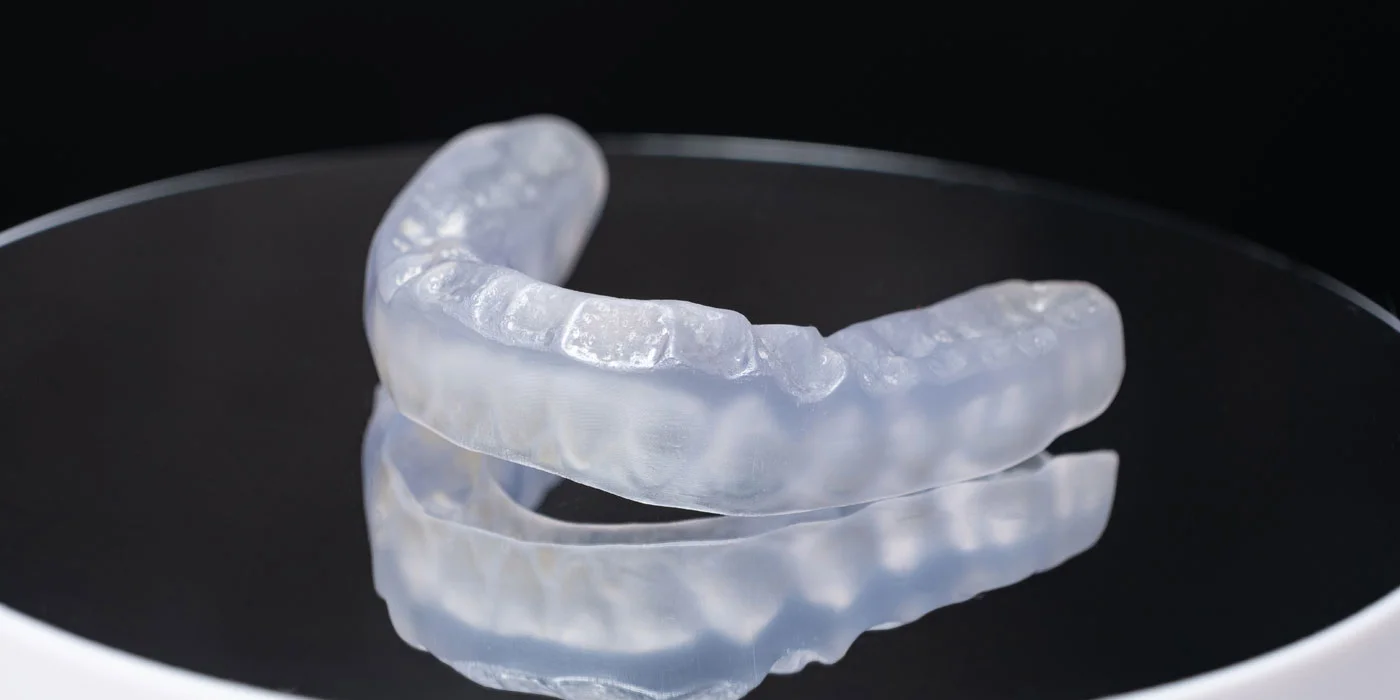
An occlusal splint — also known as a night guard or bite splint — is one of the most effective treatments available for teeth grinding. At Molonglo Dental Surgery, every splint is custom-made from precise digital impressions, designed for your teeth and nobody else’s.
Let’s go through what a splint does, the different types available, what happens at your appointment, and how to look after it.
What is an occlusal splint?
An occlusal splint is a custom-fitted appliance made from durable dental-grade acrylic, worn over your teeth while you sleep.
Its job is to act as a barrier and a buffer. The unique design, stress absorbency and close fit of the device prevent the upper and lower sets of teeth from making excessive contact, while the material itself is chosen to withstand the sustained forces of the bruxing action.
Think of it as a shock absorber for your bite. The grinding still happens — a splint doesn’t stop the habit — but the appliance takes the punishment instead of your enamel.
How does a custom occlusal splint help?
Worn comfortably over your teeth while you sleep, a well-made splint:
Distributes biting forces evenly
So no single tooth cops the brunt.
Protects your teeth
From further wear, chips and fractures, and shields existing crowns, bridges and implants from damage.
Reduces strain
On the jaw muscles and joints.
Relieves symptoms
It may ease morning headaches, jaw discomfort and the facial muscle fatigue that comes with heavy grinding.
By investing in this simple appliance, you may end up saving a great deal in future dental treatment. Grinding can fracture a tooth to the point where it needs a crown, and a crown costs considerably more than the splint that would have prevented the damage.
Custom splint or chemist mouthguard?
This is the question we’re asked most often, and the answer is unambiguous.
A professionally made, customised occlusal splint is individually designed for optimal comfort, durability and protection while maintaining a stable bite. Over-the-counter guards fit loosely, wear through quickly, offer far less protection, and can even alter your bite over time. It’s a classic case of buying cheap and paying twice.
They should also not be confused with the mouthguards sold at sports shops. Those are designed to absorb sudden impact on the field, not to withstand hours of sustained grinding pressure night after night. The two appliances are built for entirely different jobs.
Our splints are fabricated at a dental laboratory to your precise measurements, using high-quality materials and craftsmanship.
What types of splints are available?
There is no one-size-fits-all here. Your dentist will recommend the type that suits your particular pattern of wear, your symptoms and your bite:
Soft splints
Made from a flexible material, these are generally suited to lighter grinders or as a short-term option. They’re comfortable to wear but wear through faster.
Hard splints
Fabricated from rigid acrylic, these are the most durable option and the usual choice for moderate to heavy grinders. They also hold their shape and their fit far longer.
Combined hard and soft splints
A soft inner surface for comfort against the teeth, with a hard outer layer for durability. A good middle ground for patients who find rigid splints difficult to tolerate.
Specialised TMJ splints
Designed to reposition the jaw and reduce load on the joint, these are used where temporomandibular joint symptoms are a significant part of the picture.
Each is designed specifically for the individual, according to their particular requirements.
What happens at a splint appointment?
At your first appointment, your dentist examines your teeth, listens to your symptoms and discusses a treatment plan with you. If a splint is the right path, a digital scan is taken and sent to the laboratory.
Once your splint arrives, a fitting appointment is scheduled. Your dentist adjusts it for comfort, checks that your bite sits evenly on it, and shows you exactly how to wear and care for it. From first scan to fitted splint typically takes a couple of weeks.
Most patients need a short adjustment period. It’s common to feel aware of the appliance for the first few nights, and some people find they salivate more initially. Both settle quickly. If your splint still feels uncomfortable or your bite feels off after a week or so, come back and we’ll adjust it — a splint you don’t wear protects nothing.
Caring for your splint
Looking after your splint properly will extend its life considerably:
- Rinse it every morning in cool water as soon as you take it out.
- Brush it gently with a soft toothbrush and a little mild soap. Avoid toothpaste, which is abrasive and will dull the surface over time.
- Never use hot water, and never leave it in a car or on a windowsill. Heat warps acrylic and a warped splint no longer fits.
- Store it dry in its ventilated case, out of reach of pets — dogs are remarkably fond of them.
- Bring it to your check-ups so we can inspect it for wear and check that it still fits well.
With good care, a hard splint often lasts several years. Heavy grinders will wear through one faster, which is useful information in itself — visible wear on your splint is a direct measure of the forces your teeth would otherwise be absorbing.
What is a Mandibular Advancement Device (MAD)?
If you snore, sleep with an open mouth, wake up tired, or have been diagnosed with mild to moderate obstructive sleep apnoea, a Mandibular Advancement Device may be an effective alternative to CPAP therapy.
This custom-made appliance fits over both arches and gently positions the lower jaw forward during sleep, helping to keep the airway open and reduce snoring and airway obstruction.
Before recommending a MAD, we undertake a comprehensive assessment and work closely with your medical practitioner or sleep physician where appropriate. A sleep study is essential for eligibility for this type of appliance — so if you haven’t had one, that’s the first step we’ll guide you towards.
Is a splint right for you?
If you recognise the morning-after signs — jaw ache, headaches, tooth sensitivity, that tell-tale tightness — an assessment is well worth it.
For heavy grinders, a splint also pairs well with other treatments. Anti-wrinkle injections into the jaw muscles, for example, can further ease clenching for suitable patients.
With evening and weekend appointments at our Coombs practice, and payment plans through AfterPay and Ezi-Pay, protecting your teeth is easier than replacing them — in every sense.
Book your splint assessment with Molonglo Dental Surgery today.
Call 02 6287 1222 or visit us in Coombs, Molonglo Valley.
Explore more Treatments
Let’s help you get to the right place, these Molonglo services are closely connected.



Frequently Asked Questions
Signs include waking with jaw pain or stiffness, frequent headaches, worn-down teeth, tooth sensitivity, clicking jaw joints, grinding noises at night and facial pain, to name a few.
If several of these sound familiar, book an assessment with our friendly Molonglo Valley team. You can read more about the underlying condition on our Teeth Grinding & Clenching (Bruxism) page.
There are soft splints, hard splints, combined hard-and-soft splints, and specialised TMJ splints. Each is designed specifically for the individual, according to their particular requirements — there’s no one-size-fits-all here.
Your dentist will recommend the type best suited to your pattern of wear and your symptoms, and will explain why at your assessment.
Yes. A professionally made, customised occlusal splint is individually designed for optimal comfort, durability and protection while maintaining a stable bite.
Over-the-counter guards fit loosely, wear quickly and offer far less protection — a classic case of buying cheap and paying twice. Sports mouthguards are different again; they’re built to absorb impact, not sustained grinding.
At the first appointment, your dentist checks your teeth, asks about your symptoms and discusses the treatment plan. If a splint is required, a digital scan is taken and sent to the lab.
When the splint arrives, a second appointment is scheduled for fitting, where it’s adjusted for comfort and you’re given full instructions on how to use it. From scan to fitted splint typically takes a couple of weeks.
Not to worry — most patients adapt within a few nights. It’s normal to feel aware of the appliance at first, and some people notice increased saliva for the first night or two. Both settle quickly.
If it still feels uncomfortable after a week, or your bite feels uneven when you wake, come back in and we’ll adjust it. A splint should be easy enough to wear that you’ll actually wear it.
Rinse it in cool water each morning and brush it gently with a soft toothbrush and mild soap. Avoid toothpaste, which is abrasive, and never use hot water or leave it anywhere warm — heat warps the acrylic and a warped splint won’t fit.
Store it dry in its ventilated case, and bring it along to your regular check-ups so we can inspect it for wear.
With good care, a hard splint often lasts several years. Heavy grinders will get through one faster, and that’s worth knowing — visible wear on your splint is a direct measure of the forces your teeth would otherwise be taking.
We’ll check its condition at your routine appointments and let you know when replacement is worth considering.
Yes in most cases, and existing dental work is often a strong reason to have one. Grinding can crack or loosen crowns, bridges and implant restorations, and a splint helps protect that investment.
If you’re currently in orthodontic treatment, the timing and design will need to be planned around it. Mention any existing dental work at your assessment so your dentist can factor it into the design.
A standard occlusal splint won’t — but a Mandibular Advancement Device (MAD) may, for people with snoring or diagnosed mild to moderate obstructive sleep apnoea.
A sleep study is essential first; we’ll work alongside your GP or sleep physician to determine whether a MAD is suitable for you.
Costs depend on the type of splint recommended for your needs, and we’ll confirm everything clearly before the scan is taken.
We accept most health funds — many include splints under major dental — and payment plans through AfterPay and Ezi-Pay are available.