
Early Orthodontic Intervention & Expansion in Children
Have you noticed your child’s adult teeth coming through crowded or crooked? Perhaps they breathe through their mouth, still suck their thumb, or their bite just doesn’t look quite right. As a parent, it’s hard to know what’s a passing phase — and what deserves a closer look.
Here’s the good news: the best time to guide jaw growth is often while a child is still growing, and many developing problems are far simpler to correct early. Early orthodontic intervention (also known as interceptive orthodontics) focuses on identifying and treating orthodontic problems while the jaws are still developing — and at Molonglo Dental Surgery, it’s an area we have a special interest in.
Let’s go through what early intervention involves, the right ages for assessment, and how jaw expansion works.
What is early orthodontic intervention?
Rather than waiting until all the adult teeth have arrived, interceptive orthodontics identifies developing problems — a narrow upper jaw, crossbites, crowding, harmful habits — and treats them while growth is on our side. Think of it like guiding a young tree as it grows: a gentle, well-timed nudge now can prevent the need for far more drastic correction later. The ideal age for a first assessment is around 7 years, although some conditions benefit from treatment as early as 4–6 years, while others are best managed between 10 and 14.
What can be treated at each age?
Ages 4–6 (early primary dentition)
The focus is on eliminating habits that affect jaw development — prolonged thumb or dummy sucking, tongue thrust, mouth breathing — and correcting early crossbites or developing underbites. Treatment may involve habit-breaking appliances, simple removable expansion plates, space maintainers or myofunctional therapy, with ENT referral where airway issues are suspected.
Ages 7–10 (mixed dentition)
widely considered the ideal window for interceptive orthodontics. Common concerns include crowding, a narrow upper jaw, crossbites, deep or open bites and increased overjet (protruding front teeth). Treatment options include maxillary expansion, growth modification, space management and guidance of the erupting permanent teeth.
Ages 10–14 (late mixed to early permanent dentition)
The focus shifts to aligning the permanent teeth, correcting bite discrepancies and optimising facial growth before it completes — using expansion (while growth remains), functional appliances, partial or full braces, or clear aligners in selected cases.
How does jaw expansion work?
Jaw expansion gently widens a narrow upper jaw during growth, creating additional space for erupting adult teeth, improving the bite and encouraging more favourable facial development. Depending on your child’s age and dental development, this may involve a removable expander for younger children or a fixed palatal expander for older children and adolescents. These appliances apply gentle, controlled forces — and because they work with your child’s natural growth, results are often achieved more simply than the same correction would require in adulthood.
Expansion is highly effective for children with a narrow upper jaw, crowding, crossbites, airway concerns or limited space for the permanent teeth — and early intervention may reduce the need for permanent tooth extractions or more complex orthodontic treatment down the track.
What are the benefits of early intervention?
Guides jaw growth
Working with development, not against it.
Creates space
For permanent teeth to erupt into better positions.
Corrects harmful habits
Before they shape the growing face.
Reduces trauma risk
Protruding front teeth are far more vulnerable to knocks.
Supports airway and breathing
In selected children.
Simplifies future treatment
And may reduce the need for extractions or jaw surgery in some cases.
Is early orthodontic assessment right for your child?
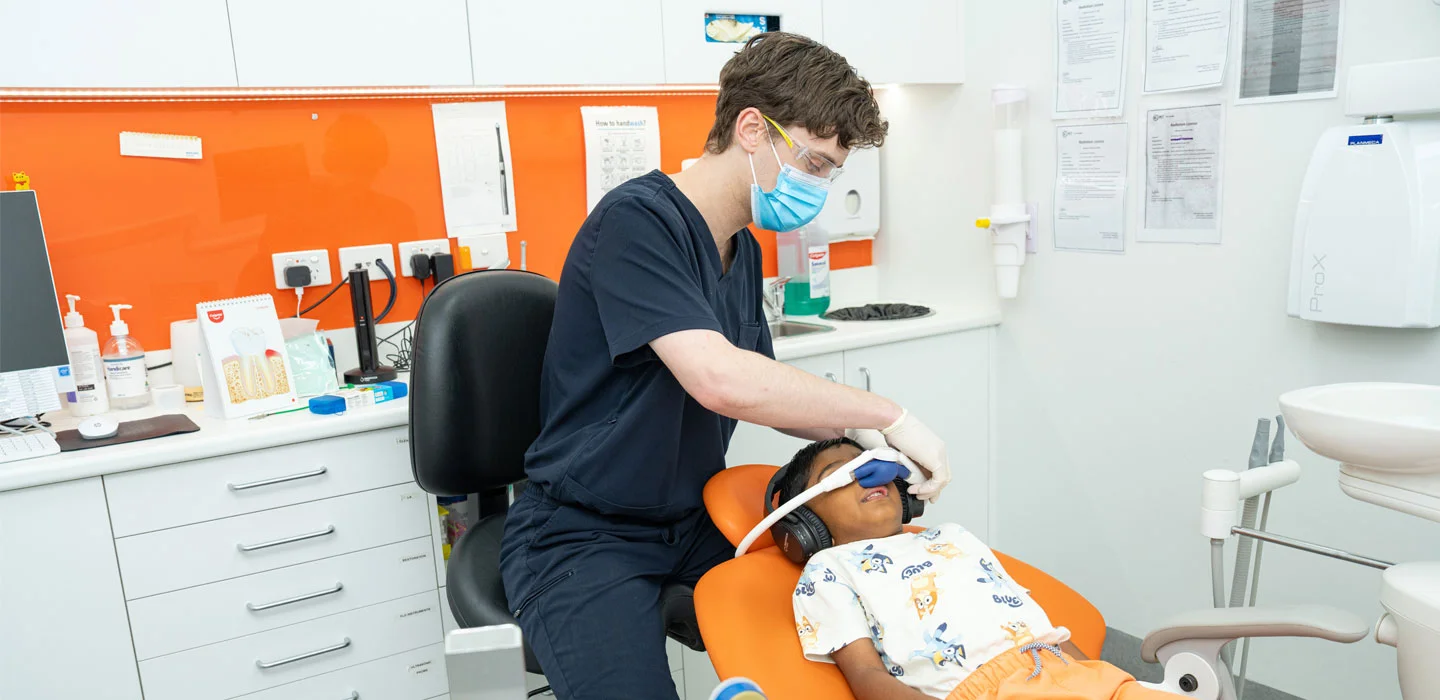
Every child is unique, and not all children require early treatment — we don’t believe in over-treatment, but in treatment delivered in a timely manner. If your child is between 4 and 14, an assessment simply tells us where things stand. At Molonglo Dental Surgery, this includes photographs, digital X-rays and a growth evaluation — with growth-specific X-rays bulk billed — to determine the most appropriate timing and approach for your child. Families travel to our Coombs practice from Belconnen, Gungahlin and across Canberra, and with evening and weekend appointments, fitting an assessment around school is easy.
Book your child’s orthodontic assessment with Molonglo Dental Surgery today. Call 02 6287 1222 or visit us in Coombs, Molonglo Valley.
Explore more Treatments
Let’s help you get to the right place, these Molonglo services are closely connected.


Frequently Asked Questions
Orthodontic expansion focuses on widening the upper jaw in growing children, using an expander to guide the growth of the maxilla (upper jaw). This creates space for erupting adult teeth and reduces misalignment before it becomes established.
At a young age, the jaw is going through a growth spurt and its development is much easier to guide, so results are very promising. Early intervention helps align the jaws and, in selected cases, can also reduce airway issues — something no amount of later treatment can fully replicate once growth is complete.
The major benefits include space for the proper eruption of adult teeth, an improved bite and alignment, support for healthy facial development, enhanced airway and breathing in selected children, and often shorter, simpler treatment at a later stage.
Expanders can be removable or fixed. The choice is tailored to each individual child’s needs and made on the basis of what will deliver the best outcome — your dentist will explain the recommendation and the reasons behind it.
If you’ve noticed significant gaps, misaligned or missing teeth, crowding, mouth breathing, thumb-sucking or other airway concerns, it’s best to have things checked at an early stage. Rest assured, an assessment doesn’t commit you to treatment — it simply gives you clear information.
The first step is an assessment with a general dentist at Molonglo Dental Surgery. After the initial checks, your child is triaged through internal referral to determine whether further treatment is needed — a simple, low-pressure pathway that starts with one phone call to 02 6287 1222.
Costs vary with the appliance and the length of treatment, so we’ll always provide a clear, personalised plan before anything begins. Growth-specific X-rays are bulk billed, we accept most health funds, and payment plans through AfterPay and Ezi-Pay help spread the cost of your child’s treatment.