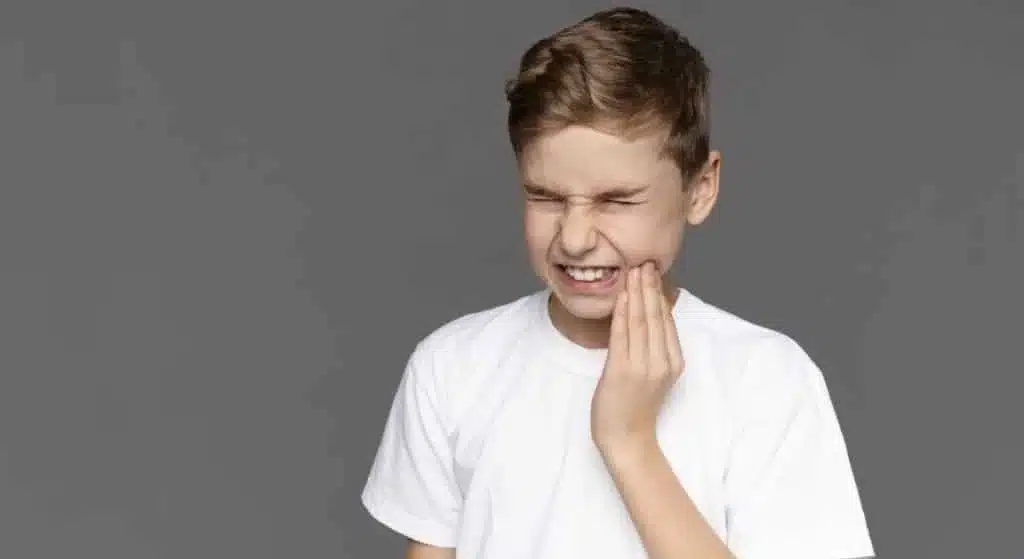
Children can injure their teeth when they tumble or while playing or during sports activities. The tooth trauma in a child may be to a baby tooth or an adult tooth. A tooth may crack, chip, come slightly loose after trauma or come out of its socket. Your child may have bleeding from the injured area, pain, and/or increased sensitivity after a tooth injury.
A fall or knock to the face can result in a wound to the lips, tongue, cheek or a loosened tooth. Mouth injuries can cause plenty of bleeding or swelling, which may need urgent dental treatment. (Your Canberra dentist at Molonglo Dental Surgery can be reached on 0457123000 for an urgent after-hours appointment.)
If a tooth is knocked out in a collision or fall, administering the correct first aid may conserve the tooth.
As you are aware, kids until the age of 6 years have deciduous or baby teeth. (Certain variations in the time of eruption are "normal". Kindly book an appointment with your kid-friendly dentist to know the difference between "acceptable" and "problematic" delays while the teeth are erupting.)
Thereafter, until the age of 16-18 years, children gradually lose their baby teeth. Deciduous teeth are replaced with adult or permanent teeth. The final tooth to erupt (if at all) is the wisdom tooth or the third molar. (Sometimes the wisdom tooth could be absent or could be "stuck in the bone." If you’re in the age group of 18-20 years, it is advisable to consult with us to know more about Impacted Third molars or painless wisdom tooth removal.)
How Do I Know if the Tooth Injury is to a Baby Tooth or an Adult Tooth?
Well, all children under the age of 5 years will certainly have their baby teeth. The permanent teeth begin appearing or erupting in the mouth only after the age of 6 years.
The two basic differences between a baby tooth and a permanent tooth are in terms of colour and edges. A baby tooth will be whiter than a permanent tooth. However, baby teeth have smooth edges while the edges of a permanent tooth will be jagged.
To know more about the type, the number and the health of the teeth in your child’s mouth, a routine visit to a dentist is advised. (Molonglo Dental Surgery is a child-friendly practice. We sympathise with our little patients and understand their fears. Hence we have a special kid’s dino chair installed in our office. Call us on 0262871222 to know more about dental check-ups for children.)
What Prompt Measures Must I Take After a Teeth Injury in My Child?
Dental trauma in children can be overwhelming not just for the child but for the primary caregiver as well. According to a recent study conducted in the Women’s and Children Hospital in Adelaide, 56.1% of dental trauma in children occurred in kids under the age of 5 years.
However, there are some differences in the management of tooth injuries depending on if the tooth is a baby/deciduous tooth or a permanent/adult tooth.
We at Molonglo Dental Surgery recommend the following guidelines in case of an injury or trauma to a tooth in a child.
Immediate Management: Trauma to Baby Teeth & Deciduous Teeth
- Try and remain calm. Once you feel in control of the situation, try and calm and reassure your child. At this point, you may expect wailing, shrieking and sobbing.
- In case of a serious injury, you may discover a lot of bleeding. In that case, arrange for a piece of clean gauze. However, if that is unavailable, a clean face washer will help too.
- If your child is at an appropriate age to follow instructions, ask him/her to bite down on the gauze or the face washer for a few minutes. If your child is little, with the gauze or face washer, apply gentle pressure on the suspected area of injury.
- You can give your child an ice-pop to suck on (age-appropriate) or hold an ice pack wrapped in a washcloth to the cheek. This will aid in reducing the swelling.
- The subsequent step would be to take a quick look at the area of injury to check how much of the tooth remains in the mouth.
However, if the injury seems serious and the bleeding doesn't stop or it seems like a severe head injury, it's imperative to rush to the ED of the nearest hospital immediately.
Chipped Tooth: If a small part of the tooth has chipped, you needn’t worry much about the tooth immediately. Your child wouldn’t need urgent after-hours care for a minor chip, but an eventual visit to the dentist is mandatory to assess the tooth and surrounding gums to plan restorative or aesthetic treatment as necessary.
Broken Tooth: If half or more of the baby tooth has broken, check your child’s mouth to find the broken piece to ensure they don't choke on it. Save the broken piece in cotton for your dentist to evaluate.
Slightly Loose Tooth After Trauma: If a tooth is moving slightly in its socket, the gums will often tighten around it over time. During this recovery period, your child may experience pain when chewing; acetaminophen or ibuprofen can be administered as needed. Watch closely for colour changes, increasing pain, fever, or boils/blisters on the gums, and schedule a dental consultation at your earliest convenience.
Whole Baby Tooth Out of the Mouth: If an entire baby tooth comes out of its socket, confirm that it is no longer inside your child's mouth. A knocked-out baby tooth cannot be re-implanted. Schedule a quick dental consultation so your dentist can evaluate the space and prevent future alignment issues for permanent teeth.
Knocked-Out Adult Tooth: A permanent tooth knocked out of its socket is a critical dental emergency requiring immediate action.
Emergency First Aid for a Knocked-Out Permanent Tooth
- Find the tooth immediately.
- Call your dentist for an emergency appointment.
- Hold the tooth by the "crown" portion only (the chewing surface). Do not touch the root to avoid damaging delicate tissue cells.
- If the tooth is dirty, gently rinse it with milk or the child’s saliva to remove debris. Never scrub it or use water.
- Place the tooth in a zip-lock bag containing milk or saliva to transport it to the dentist.
- Have your child bite down gently on a piece of clean gauze or a washcloth to control bleeding and pain.
Alternatively, if the tooth is clean and uncontaminated, you can gently rinse it with milk and place it back into the child's tooth socket immediately. Have your child bite down gently to hold it in place until you reach the clinic.
Preventing Dental Injuries in Children
It is a good idea to educate yourself with regards to traumatic injuries in children and their immediate management. Your family-friendly practice in Canberra, Molonglo Dental Surgery, shall be pleased to guide you and your child’s primary caregiver in immediate trauma management.
In addition, school teachers and sports coaches should be familiar with first-aid steps, as they are often first responders. Youngsters and teenagers active in sports should be encouraged to wear custom mouthguards, helmets, and protective gear during play.
Strategic measures for preventing dental and oral injuries include educating parents and primary caregivers on how to avoid traumatic injuries in paediatric dentistry and knowing what steps to take when accidents happen.
Are Children’s Treatments Expensive?
Launched on 1 January 2014, the Child Dental Benefits Schedule (CDBS) is a dental benefits programme that provides eligible children and teenagers aged 2 to 17 with up to $1,158 for basic dental services.
At Molonglo Dental Surgery, we welcome all CDBS claims from eligible children. Present your eligibility letter or Medicare card at our clinic to verify eligibility and process claims on the spot. In most cases, there are no out-of-pocket expenses for basic dental services covered under the CDBS guidelines.
To book an appointment or check your eligibility for CDBS benefits, call us at 02 6287 1222 or visit our Child Dental Benefits Schedule page to learn more.
From General dentistry to Endodontics, Periodontics, Pediatric dentistry and Aesthetic dental services, Molonglo Dental Surgery is a well-equipped and family-friendly practice. It is the only health centre you’ll require for all your oral care needs.